
1. Introduction
Lithium batteries power almost everything in modern life. From smartphones in Pakistan to electric cars in the USA and solar systems in the UK, these batteries are everywhere.
But one question always comes up:
How long does a lithium battery actually last?
The answer is not simple. It depends on usage, temperature, charging habits, and battery type.
In this guide, we will explain lithium battery lifespan in a very simple way. You will also learn how to extend battery life and avoid common mistakes that reduce performance.
2. What is a Lithium Battery?
A lithium battery is a rechargeable energy storage device that uses lithium ions to store and release power.
It is widely used because it offers:
- High energy density
- Lightweight design
- Long cycle life
- Fast charging capability
You will find lithium batteries in:
- Smartphones
- Laptops
- Electric vehicles (EVs)
- Solar energy systems
- Power banks
3. Average Lithium Battery Lifespan
The lifespan of a lithium battery is usually measured in years and charging cycles.
Typical lifespan range:
- Smartphones: 2 to 4 years
- Laptops: 3 to 6 years
- Electric vehicles: 8 to 15 years
- Solar storage batteries: 10 to 20 years
Key point:
A lithium battery does not suddenly stop working. Instead, it slowly loses capacity over time.
After 500–2000 charging cycles, most batteries start showing noticeable decline.
4. Key Factors That Affect Battery Life
Several factors impact lithium battery lifespan:
1. Temperature
Heat is the biggest enemy of lithium batteries.
- High heat = faster degradation
- Cold temperatures = reduced performance
2. Charging habits
Poor charging habits can reduce lifespan quickly.
Examples:
- Overcharging
- Charging overnight daily
- Using fake chargers
3. Depth of discharge
Fully draining a battery regularly reduces its life.
4. Usage intensity
Heavy usage like gaming or EV acceleration increases battery wear.
5. Battery quality
Premium batteries last longer than cheap alternatives.
5. Battery Cycle Life Explained
A cycle means one full charge and discharge.
For example:
- Using 50% today and 50% tomorrow = 1 cycle
Cycle life comparison:
| Battery Type | Average Cycle Life |
|---|---|
| Standard Li-ion | 500–1000 cycles |
| LiFePO4 (Lithium Iron Phosphate) | 2000–6000 cycles |
| EV-grade lithium batteries | 1500–3000 cycles |
The higher the cycle life, the longer the battery lasts.
6. Lithium Battery Types Comparison
| Type | Lifespan | Safety | Cost | Usage |
|---|---|---|---|---|
| Li-ion | Medium | Moderate | Low | Phones, laptops |
| LiFePO4 | High | Very safe | High | Solar, EV storage |
| Lithium Polymer | Medium | Moderate | Medium | Slim devices |
Key insight:
LiFePO4 batteries are becoming popular in solar systems in Pakistan and the USA due to long lifespan and safety.
7. Real-Life Applications
Smartphones
Modern smartphones lose about 20% capacity after 2–3 years.
Common issue:
- Battery drains faster over time
Electric Vehicles
EV batteries are designed to last 8–15 years.
Companies like Tesla optimize battery management systems to extend life.
Solar Energy Systems
Solar lithium batteries are widely used in:
- Pakistan (load shedding backup systems)
- USA homes (off-grid systems)
- UK renewable energy storage
These batteries often last 10–20 years.
8. Pros and Cons of Lithium Batteries
Pros
- Long lifespan compared to older batteries
- Lightweight and compact
- Fast charging
- High energy efficiency
- Low maintenance
Cons
- Expensive compared to lead-acid batteries
- Sensitive to heat
- Performance decreases over time
- Requires proper charging system
9. Expert Tips to Extend Lithium Battery Life
Here are practical expert-backed tips:
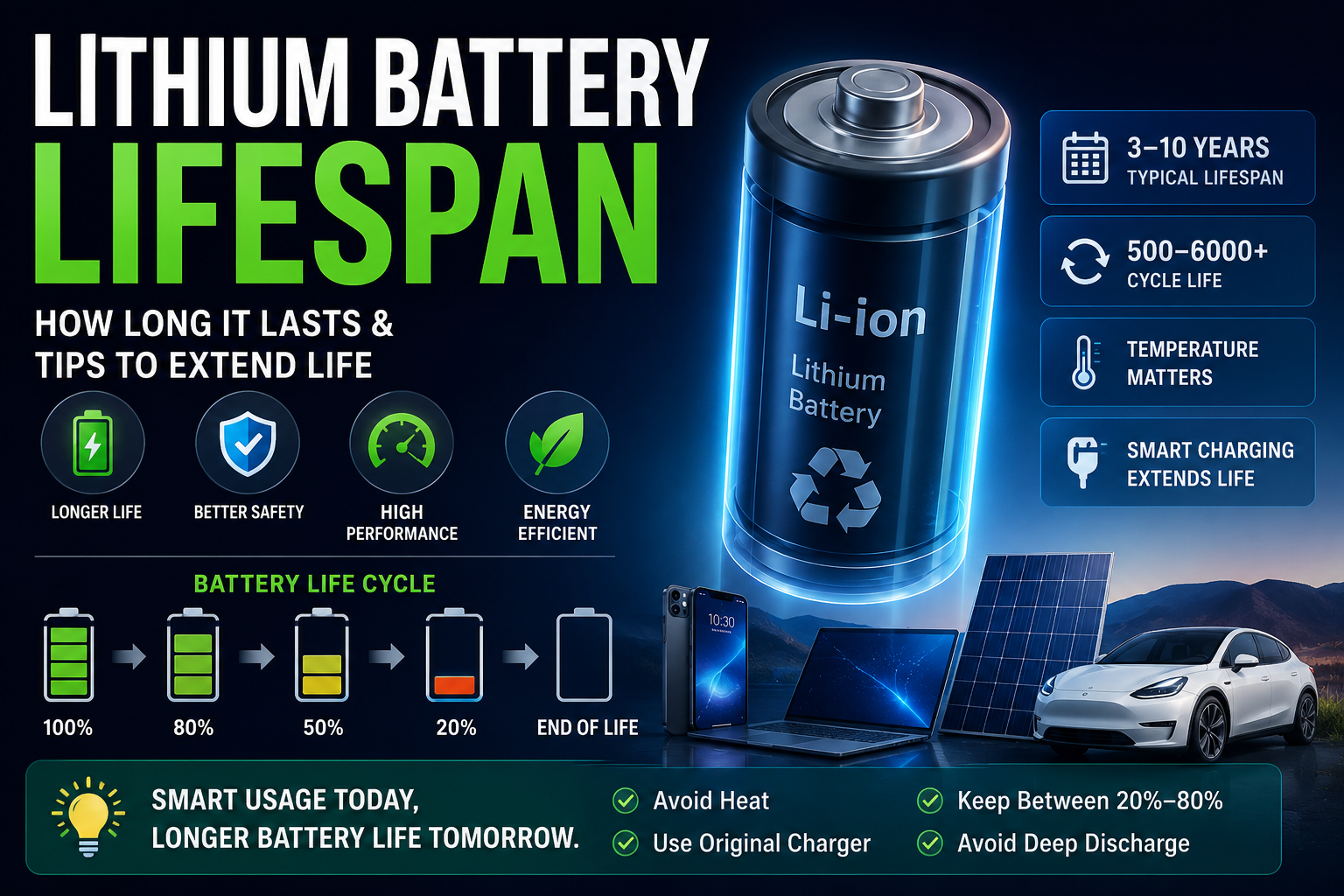
1. Keep battery between 20%–80%
Avoid full charge and full discharge regularly.
2. Avoid heat exposure
Do not leave devices in hot cars or direct sunlight.
3. Use original chargers
Cheap chargers can damage battery cells.
4. Avoid overnight charging
Modern phones stop charging, but heat still builds up.
5. Store at 50% charge
If not using device for long time, store it at half charge.
6. Use battery management systems (BMS)
Especially important for solar and EV systems.
10. Common Problems and Solutions
Problem 1: Battery drains fast
Solution: Reduce background apps and check battery health.
Problem 2: Device overheating
Solution: Avoid heavy usage while charging.
Problem 3: Battery swelling
Solution: Stop using immediately and replace battery.
Problem 4: Slow charging
Solution: Replace cable or adapter.
11. Lithium Battery Lifespan in Different Conditions
| Condition | Impact on Lifespan |
|---|---|
| Normal usage | Full lifespan |
| High heat | Reduces 30–40% life |
| Frequent fast charging | Moderate reduction |
| Deep discharges | High reduction |
| Proper maintenance | Maximum lifespan |
12. Lithium Battery in 2026 Trends
Modern battery technology is improving fast.
Key trends:
- Solid-state batteries (future technology)
- Faster charging systems
- AI-powered battery management
- Longer EV battery warranties
Companies are now focusing on sustainability and longer lifecycle design.
13. FAQs (10 Questions)
1. How long does a lithium battery last?
Usually 3 to 10 years depending on usage.
2. What is the biggest enemy of lithium batteries?
Heat and overcharging.
3. Can lithium batteries be overcharged?
Modern devices prevent this, but heat damage can still occur.
4. Do lithium batteries degrade if not used?
Yes, they slowly lose charge over time.
5. What is a good charging range?
20% to 80% is ideal.
6. Are lithium batteries safe?
Yes, when used properly with a good BMS.
7. Why do batteries swell?
Due to internal chemical breakdown and heat.
8. Can I replace lithium batteries myself?
Some devices allow it, but EV/solar systems require experts.
9. Do fast chargers reduce lifespan?
Slightly, due to heat generation.
10. Which battery lasts the longest?
LiFePO4 batteries have the longest lifespan.
14. Conclusion
Lithium battery lifespan depends heavily on how you use and maintain it.
If used correctly, a lithium battery can last many years and deliver strong performance.
Key takeaways:
- Avoid heat and overcharging
- Keep charge between 20%–80%
- Use quality chargers and systems
- Choose the right battery type for your needs
Whether you’re in Pakistan dealing with backup power, in the USA using EVs, or in the UK running solar systems, proper battery care saves money and improves performance.