
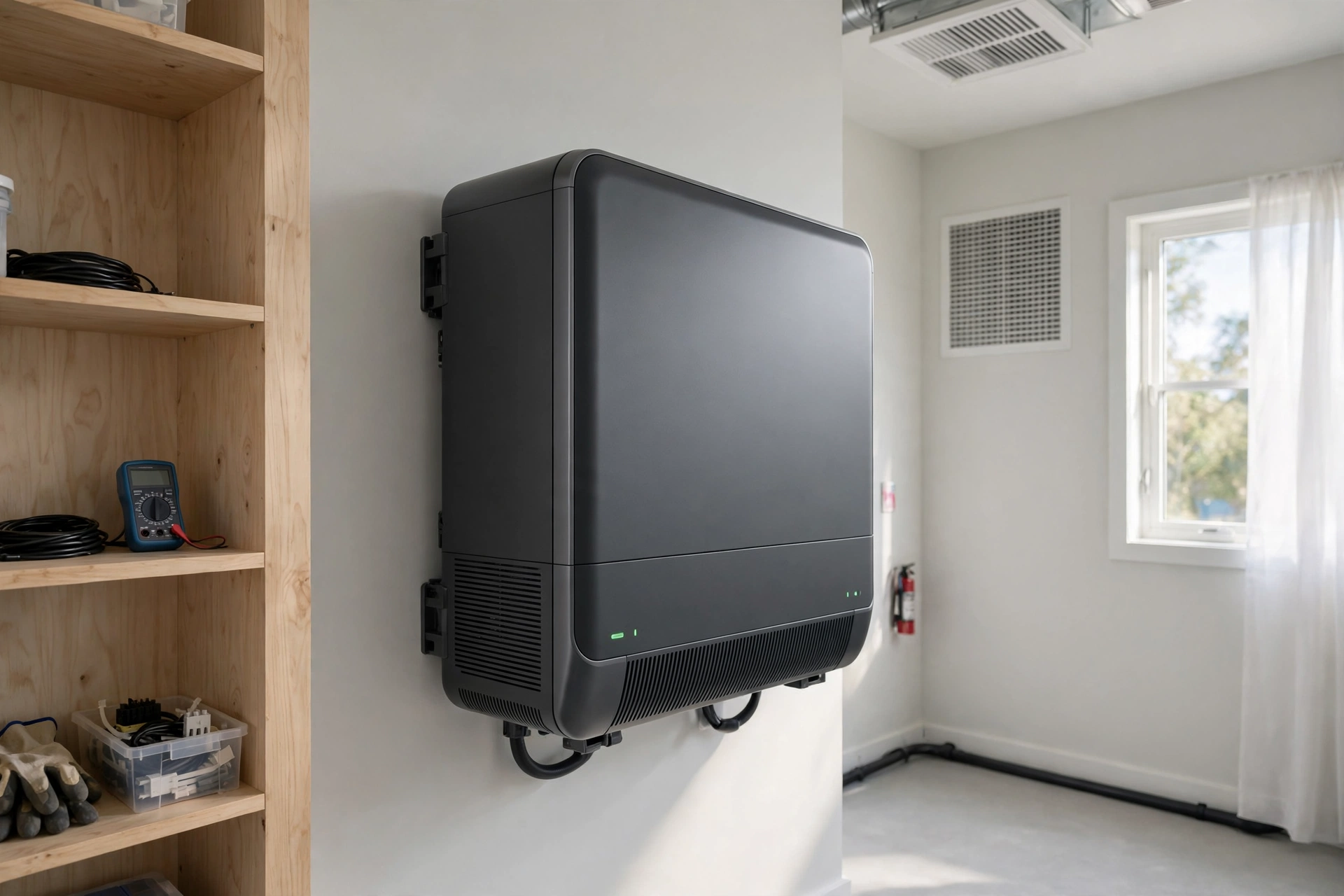
How Long Do LiFePO4 Batteries Last? Cycle Life Explained
Table of Contents
- Quick Answer: How Long Do Lithium Batteries Last?
- What “Battery Lifespan” Actually Means: Cycles vs. Years
- How Long Do LiFePO4 Batteries Last? The Straight Answer
- LiFePO4 vs NMC vs Lead-Acid: Lifespan Comparison
- Cycle Life vs Calendar Aging: Your Battery Has Two Clocks
- 7 Factors That Decide How Long Your Lithium Battery Lasts
- How to Make Your LiFePO4 Battery Last 15 Years: A Practical Checklist
- Signs Your Lithium Battery Is Reaching the End of Its Life
- LiFePO4 Battery Prices in Pakistan: Is the Long Life Worth It?
- Frequently Asked Questions
- Conclusion
Introduction
If you are shopping for a battery for your solar system or home UPS in Pakistan, one question matters more than all the specifications on the datasheet: how long do lithium batteries last before you need to buy another one?
It is a fair question, because a lithium battery is a serious investment. A good LiFePO4 battery pack can cost several times more than a conventional tubular lead-acid battery upfront. The promise sellers make is that it lasts so much longer that it works out cheaper in the end. But is that actually true? And what does “lasts longer” mean in real numbers — in years, in charge cycles, in a hot Pakistani summer?
This guide answers those questions with real, sourced numbers — not marketing claims. You will learn exactly how long LiFePO4 batteries last, how they compare with NMC lithium and lead-acid batteries, the seven factors that decide your battery’s real lifespan, and practical steps to get 15 years out of your investment. We will also look specifically at Pakistan’s climate, because heat is one of the biggest silent killers of battery life, and it is something most generic guides ignore.
Related reading: If you want the broader picture of battery longevity, see our detailed guide on lithium battery lifespan: how long it lasts and tips to extend it.
Quick Answer: How Long Do Lithium Batteries Last?
A quality LiFePO4 (lithium iron phosphate) battery typically lasts 10 to 15 years, or roughly 6,000 to 8,000 full charge–discharge cycles when used at 80–90% depth of discharge under normal conditions (around 25°C). Cheaper cells or harsh conditions — extreme heat, constant 100% deep discharges, poor charging — can cut that to 5–8 years. By comparison, NMC lithium batteries generally last 5–8 years (1,000–3,000 cycles), and deep-cycle lead-acid batteries last 3–6 years (300–1,000 cycles at 50% discharge).
In short: LiFePO4 is currently the longest-lasting rechargeable battery chemistry available for home solar and backup power. The rest of this article explains what those numbers depend on, and how to make sure your battery reaches the top of its range.
What “Battery Lifespan” Actually Means: Cycles vs. Years
Before the numbers, a quick but important clarification. When manufacturers and sellers talk about how long a battery lasts, they mean one of two different things — and mixing them up causes most of the confusion.
Cycle life is the number of complete charge–discharge cycles a battery can deliver before its capacity drops to a defined “end of life” level. One cycle means using 100% of the battery’s capacity — it does not have to happen in a single day. If you use 50% of the battery today and 50% tomorrow, that counts as one cycle, not two.
Calendar life is how many years the battery lasts regardless of use. Even a battery sitting on a shelf slowly degrades, because the chemistry inside it keeps reacting — just very slowly.
End of life almost never means the battery suddenly dies. Industry convention defines end of life as the point where the battery can only hold 80% of its original rated capacity (some manufacturers use 70% or even 65%). A “dead” 5 kWh LiFePO4 battery at end of life still stores 4 kWh — it just no longer meets its original specification.
Why does this matter for you? Because a datasheet claiming “8,000 cycles” is measured under laboratory conditions — 25°C, controlled charge rates, and a specific depth of discharge. Your real-world lifespan depends on how far your usage differs from those conditions. That is what the next sections unpack.
How Long Do LiFePO4 Batteries Last? The Straight Answer
LiFePO4 — lithium iron phosphate, sometimes abbreviated LFP — is the chemistry behind most modern home solar batteries. Here is what current manufacturer specifications and industry data say:
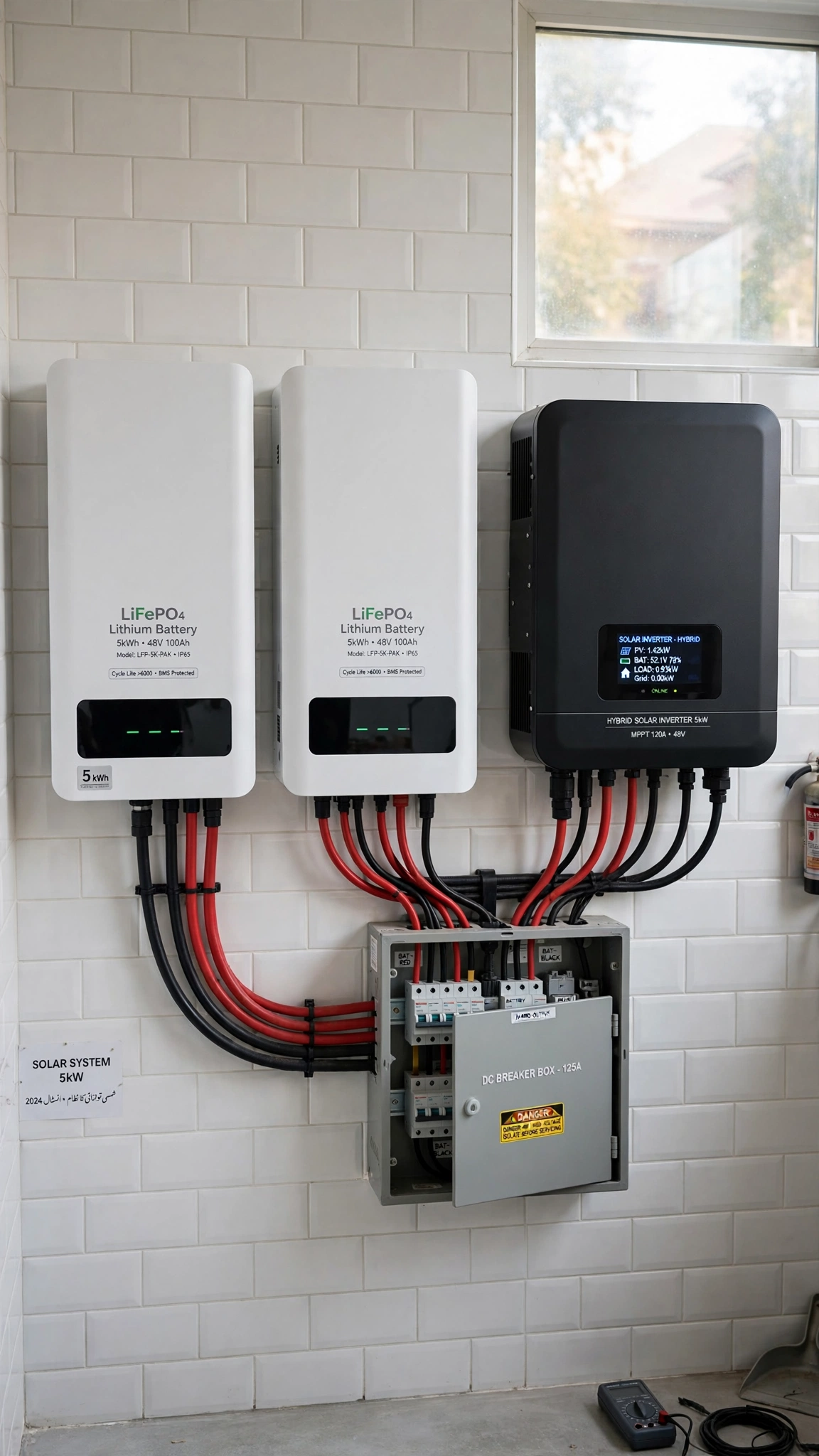
- Cycle life: Quality LiFePO4 battery packs are commonly rated for 6,000 to 8,000 cycles at 80–90% depth of discharge, tested at 25°C. For example, current 51.2V (48V-class) wall-mounted packs from established manufacturers carry ratings of ≥6,000 cycles at 90% depth of discharge and 0.2–0.5C charge/discharge rates, with some rated up to 8,000 cycles. Individual cell datasheets (e.g., EVE’s LiFePO4 cells) specify ≥4,000 cycles with at least 80% capacity retention.
- Calendar life: 10 to 15+ years of service is the widely cited expectation for LiFePO4 in stationary storage, with some manufacturers advertising a 15-year design life.
- Warranty: Reputable LiFePO4 home batteries are commonly advertised with 5- to 10-year warranties, which is itself a signal — manufacturers rarely warranty a product for most of a decade unless the chemistry reliably supports it.
To put that in practical terms: a home in Pakistan that cycles its battery once per day (charged by solar during the day, discharged at night) would use about 365 cycles per year. At 6,000 cycles, that is over 16 years of daily cycling before reaching end of life on cycle count alone. In practice, calendar aging means the realistic expectation is 10–15 years — still two to three times longer than a lead-acid battery bank.
One caveat: these figures describe quality, Grade-A cells with a proper battery management system (BMS). Cheap no-name packs with poor cells or a weak BMS may deliver far fewer cycles. Always check the datasheet for the cycle-life test conditions (temperature, depth of discharge, and C-rate) — a cycle rating without test conditions tells you almost nothing.
LiFePO4 vs NMC vs Lead-Acid: Lifespan Comparison
Not all lithium batteries are the same, and lithium is not the only option. Here is how the three chemistries most relevant to Pakistani buyers compare on lifespan:
| Feature | LiFePO4 (LFP) | NMC Lithium | Deep-Cycle Lead-Acid |
|---|---|---|---|
| Typical cycle life | 4,000–8,000 cycles | 1,000–3,000 cycles | 300–1,000 cycles |
| Expected lifespan | 10–15+ years | 5–8 years | 3–6 years |
| Usable depth of discharge | 80–100% | 80–90% | ~50% |
| Calendar aging | Slow | Moderate | Faster in heat |
| Heat tolerance | Good (stable chemistry) | Degrades faster in heat | Poor in sustained heat |
| Maintenance | None (sealed) | None (sealed) | Regular (flooded types) |
| Cobalt content | None | Yes | None (lead instead) |
| Best for | Home solar, daily cycling | EVs, space-constrained uses | Tight budgets, legacy systems |
Sources: manufacturer-published specifications and industry comparison data; see external references at the end. Figures are typical ranges — individual products vary.
A few things worth noting from this table:
LiFePO4 vs NMC. Both are lithium-ion, but they behave differently. NMC (nickel manganese cobalt) packs more energy into a smaller space, which is why it dominates electric vehicles. But its cycle life is roughly one-third to one-half that of LiFePO4, and it is more sensitive to heat — a real disadvantage in Pakistan. For stationary home storage, where size matters less than longevity, LiFePO4 is the better choice. This is also why most mainstream home-storage battery brands now build their residential ranges on LiFePO4.
Lithium vs lead-acid. A deep-cycle lead-acid battery (the tubular batteries common in Pakistani homes) typically delivers 300–1,000 cycles if you limit discharge to 50% — and only about 300–500 cycles if regularly discharged to 80%. Its practical lifespan is 3–6 years. LiFePO4 delivers roughly 5–10 times more cycles and lets you safely use 80–90% of its capacity instead of 50%. That means a 100Ah LiFePO4 battery gives you roughly the same usable energy as a 160–180Ah lead-acid battery.
Deeper dive: For a full head-to-head on cost, performance, and maintenance, read our lithium battery vs lead-acid battery comparison.
Cycle Life vs Calendar Aging: Your Battery Has Two Clocks
Here is a concept most battery guides skip, but it explains a lot of real-world surprises: your battery is aging on two clocks at once.
Clock 1 — cycle aging: every charge and discharge wears the battery slightly. Active materials degrade, the protective SEI layer on the anode thickens, and a tiny amount of lithium gets trapped where it can no longer participate. This is the aging most people think about.
Clock 2 — calendar aging: the battery degrades even when idle. Chemical side reactions continue slowly at all times, and they accelerate with higher temperature and higher state of charge. A battery stored for a year at 100% charge in a 40°C room loses far more capacity than one stored at 50% charge in a 25°C room — even though neither was cycled at all.
Why this matters: published research on lithium-ion storage shows that a battery kept at 30°C can lose around 20% of its capacity in 18 months of storage, roughly double the loss rate of one kept at 20°C. Storage data from battery manufacturers tells the same story in annual terms: about 5–8% capacity loss per year at 25°C, rising to 15–20% per year at 40°C.
The practical takeaway: whichever clock runs out first decides your battery’s life. If you cycle daily in a cool room, cycle aging dominates and you get the full 6,000+ cycles. If your battery sits in a hot storeroom in Multan barely being used, calendar aging can kill it long before the cycle count does. In Pakistan’s climate, managing heat is at least as important as managing cycles.
7 Factors That Decide How Long Your Lithium Battery Lasts
1. Depth of Discharge (DoD): The Single Biggest Lever
Depth of discharge is the percentage of the battery’s capacity you use before recharging. Using 8 kWh from a 10 kWh battery is 80% DoD. This is the factor you control most directly, and it has the largest effect on cycle life.
The relationship is simple: shallower discharges = dramatically more cycles. Industry-reported indicative figures for LiFePO4 illustrate the trend:
| Depth of Discharge | Indicative Cycle Life (LiFePO4) |
|---|---|
| 100% (full use) | ~2,500–3,500 cycles |
| 80% | ~4,000–6,000 cycles |
| 50% | ~8,000–10,000 cycles |
Indicative ranges compiled from battery-industry publications; exact figures vary significantly by manufacturer, cell quality, temperature, and the capacity threshold used to define end of life. Treat these as illustrating the trend, not as guarantees.
Notice the pattern: cutting your regular discharge from 100% to 80% can roughly double your cycle count. Dropping to 50% can triple it. Most quality LiFePO4 packs are rated for daily use at 80–90% DoD, which is an excellent balance — you get most of the capacity while preserving most of the lifespan. There is rarely a reason to regularly push to 100%.
Practical rule for Pakistan: size your battery so your normal nightly use stays at or below 80% DoD. If you routinely drain the battery to zero, you bought a battery that is too small — and you are paying for it in lifespan.
2. Temperature: Pakistan’s Heat Problem
Heat is the silent killer of lithium batteries, and it deserves special attention for Pakistani buyers. Summer temperatures across much of Pakistan’s plains — Lahore, Multan, Gujranwala, Sukkur — routinely climb past 40°C, and battery rooms, rooftops, and metal enclosures can get significantly hotter than the air outside.
Here is what heat does, based on published battery research:
- Every 10°C rise above 25°C roughly doubles the rate of chemical degradation. This is one of the most consistently reported findings in battery-aging research.
- Charging a battery at 45°C causes more than double the degradation compared to charging at 25°C.
- Above 45°C, the aging rate accelerates sharply; prolonged exposure above 50°C can cut overall lifespan by more than half.
- Storage losses climb fast with temperature: roughly 5–8% capacity loss per year at 25°C, versus 15–20% per year at 40°C.
LiFePO4 handles heat better than NMC — its iron-phosphate chemistry is inherently more thermally stable — but “better” does not mean “immune.” A LiFePO4 battery baking in a 48°C rooftop enclosure in June will age far faster than its datasheet suggests.
What to do about it:
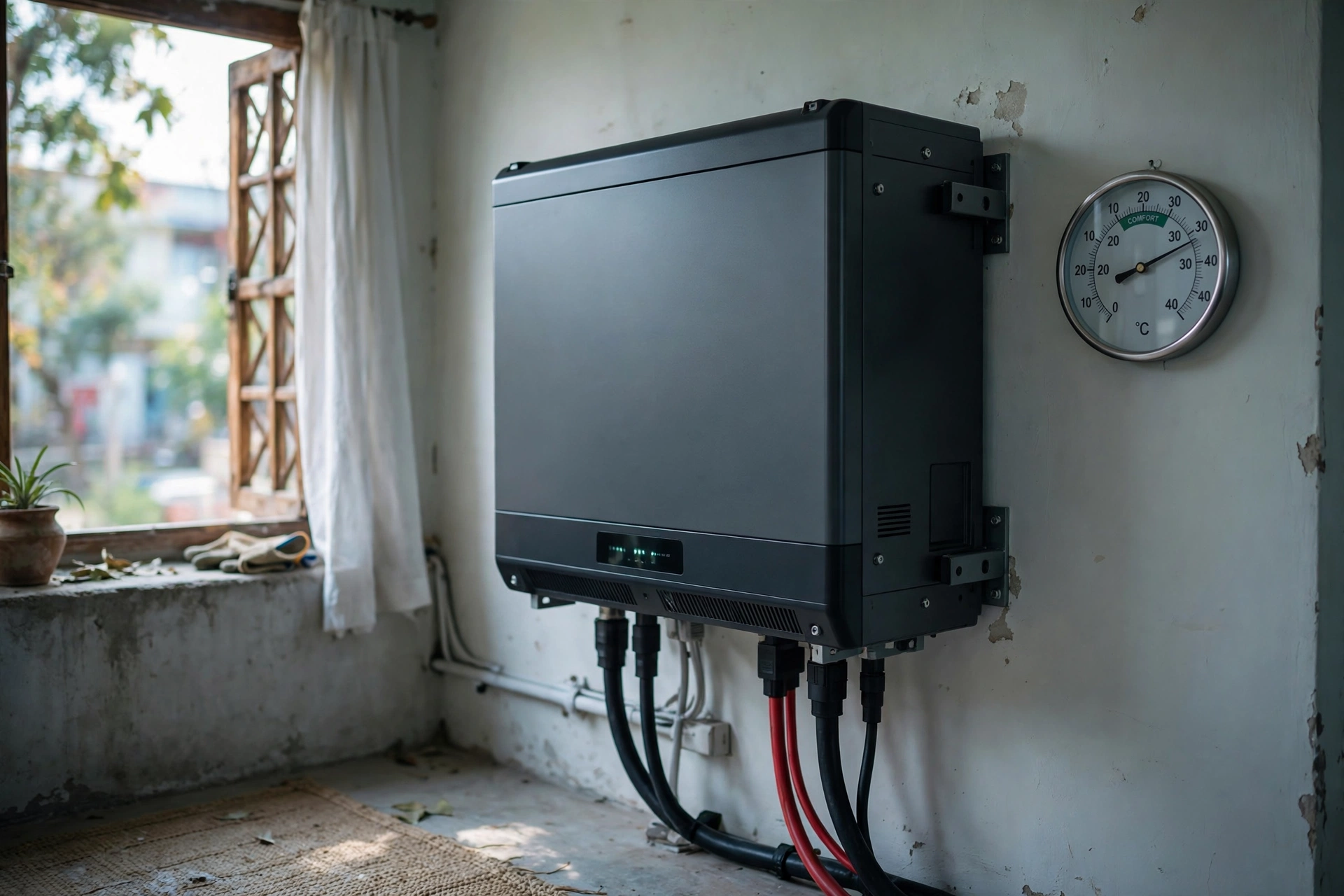
- Install the battery in the coolest shaded indoor location available — never in direct sun, and never in a sealed metal box on a rooftop.
- Ensure ventilation and airflow around the battery; leave the manufacturer’s recommended clearance on all sides.
- If the battery room regularly exceeds 40°C, consider a small exhaust fan or moving the battery to a cooler room. This single step can add years to its life.
- Never charge a lithium battery below 0°C either — charging in freezing conditions causes lithium plating, which permanently damages the cells. (Less of a concern in most of Pakistan, but relevant for northern areas in winter.)
3. Charge and Discharge Rate (C-Rate)
The C-rate describes how fast you charge or discharge relative to the battery’s capacity. A 100Ah battery discharged at 100A is running at 1C; at 50A, it is 0.5C. Faster rates generate more internal heat and mechanical stress, which accelerates aging.
Manufacturer cycle-life ratings are typically measured at 0.2C to 0.5C — gentle rates. Most home solar use naturally falls in this range, which is good. Problems arise when a battery is chronically undersized: a small battery forced to run a heavy load (air conditioner, water pump) may run at 1C or higher for hours, generating heat and wearing faster.
Practical rule: if your inverter regularly pulls high current from a small battery, consider adding battery capacity. It is cheaper than replacing a worn-out battery early.
4. State-of-Charge Habits: The 20–80% Sweet Spot
Where a battery sits matters, not just how deeply it cycles. Lithium batteries are happiest in the middle of their charge range. Two habits measurably extend life:
- Avoid storing at 100% charge. If your solar system fully charges the battery by noon and it sits at 100% through a hot afternoon, calendar aging accelerates. Some advanced inverters let you cap the maximum charge at 90% — worth enabling if available.
- Avoid leaving the battery fully empty. Letting a lithium battery sit at 0% for days or weeks can cause deep-discharge damage. If you are going away, leave the battery at 40–60% charge in a cool place.
For daily solar cycling, simply using the battery normally (charging during the day, discharging at night) keeps it moving through the healthy middle range automatically.
5. Cell Quality and the BMS
Two batteries with identical “LiFePO4” labels can have very different lifespans. Grade-A cells from established manufacturers (EVE, CATL, BYD, and similar) consistently deliver their rated cycle life; cheaper Grade-B or ungraded cells may not. Unfortunately, cell grade is invisible from the outside — which is why buying from reputable sellers and brands matters more than chasing the lowest price.
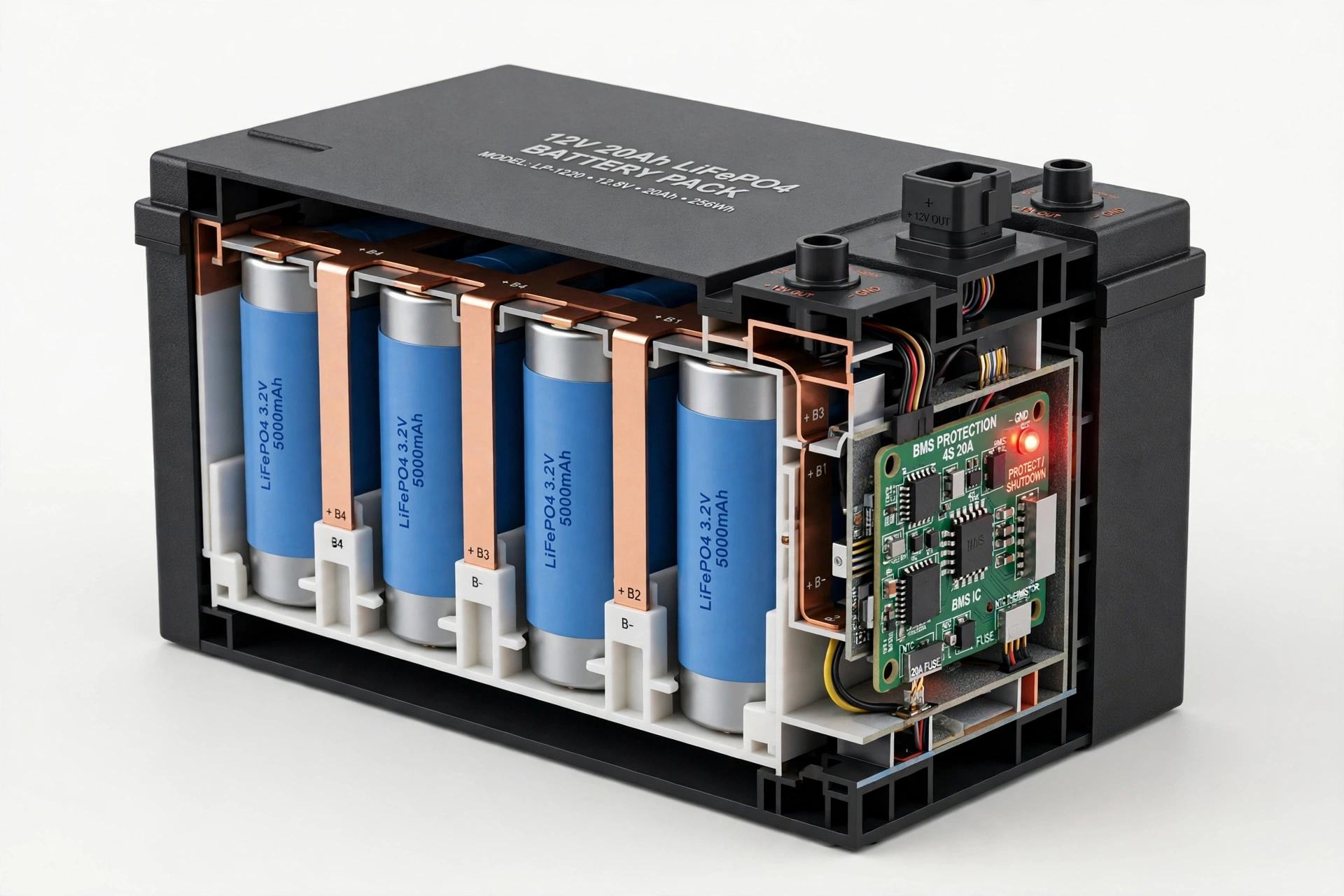
Equally important is the Battery Management System (BMS) — the electronic brain inside the pack. A good BMS protects against overcharging, over-discharging, over-current, short circuits, and over-temperature, and it keeps individual cells balanced. A weak or missing BMS lets small abuses accumulate into early failure. When comparing batteries, ask specifically about the BMS: does it have temperature protection? Cell balancing? Communication with the inverter (CAN/RS485)?
6. Charging Habits and Charger Quality
How you charge matters as much as how you discharge:
- Use the correct charger or a compatible inverter with proper lithium settings. Lead-acid charging profiles (especially equalization charges) can damage lithium batteries. If your inverter has a lithium/LiFePO4 battery mode, use it.
- Avoid overcharging. Quality BMS units prevent this automatically, but misconfigured inverter settings can still push voltage too high.
- Do not routinely fast-charge unless the battery is rated for it. Slower charging is gentler and cooler.
- Keep firmware updated on smart batteries and hybrid inverters — manufacturers occasionally improve charging algorithms.
7. Storage Conditions
If the battery will sit unused — a spare battery, a seasonal property, or long travel — store it right:
- Charge level: 40–60% (roughly half).
- Temperature: 15–25°C in a dry, ventilated place.
- Check every 3–6 months and top up if it has self-discharged significantly.
- Never store in a hot car, a sun-baked storeroom, or anywhere temperatures regularly exceed 40°C.
Want the fundamentals first? Our ultimate guide to how lithium batteries work explains the chemistry behind everything in this article in plain language.
How to Make Your LiFePO4 Battery Last 15 Years: A Practical Checklist
Everything above, condensed into actions. Follow these and your battery has the best possible chance of reaching its full 10–15 year potential:
- Size it right: choose capacity so normal daily use stays at or below 80% depth of discharge.
- Keep it cool: install indoors in shade with airflow; keep the room below 35°C if at all possible.
- Set the inverter correctly: use the LiFePO4/lithium battery profile; set appropriate charge voltages per the battery manual.
- Cap the top: if your inverter allows it, limit maximum charge to 90% for daily cycling.
- Do not drain to zero regularly: treat 10–20% remaining as your practical floor.
- Buy quality: Grade-A cells and a proper BMS with temperature protection — verify the datasheet’s cycle-life test conditions.
- Avoid chronic high-rate discharge: if loads are heavy, add battery capacity rather than stressing a small pack.
- Store correctly: 40–60% charge, cool and dry, checked every few months.
- Maintain connections: clean, tight terminals prevent resistance, heat, and uneven charging.
- Monitor: if your battery or inverter shows cell voltages, temperature, or cycle count, glance at them monthly — early warnings show up here first.
Signs Your Lithium Battery Is Reaching the End of Its Life
Batteries rarely fail overnight. Watch for these gradual warning signs:
- Noticeably shorter backup time — the battery that once ran your home through the night now dies by 2 AM under the same load.
- The battery reaches “full” suspiciously fast and drops quickly — a classic sign of lost capacity.
- Swelling or deformation of the casing — stop using the battery and consult a professional; this indicates internal damage.
- The BMS frequently cuts off or shows cell imbalance warnings.
- Unusual heat during normal charging or discharging.
- Voltage readings that do not match the displayed state of charge.
If you see swelling, leaking, or extreme heat, treat it as a safety issue: disconnect the battery, move it away from flammable materials, and contact your supplier. Do not attempt to open or repair a lithium battery yourself.
LiFePO4 Battery Prices in Pakistan: Is the Long Life Worth It?
This is where lifespan numbers turn into a buying decision. LiFePO4 batteries cost more upfront than lead-acid — often two to four times more for the same nominal capacity, though prices vary widely by brand and seller. But nominal capacity is misleading, because you can only safely use about 50% of a lead-acid battery versus 80–90% of a LiFePO4 battery, and the LiFePO4 lasts two to three times longer.
Rough price guidance (as of October 2026 — verify current prices before buying):
- 12V 100Ah LiFePO4 battery: approximately PKR 55,000–85,000
- 51.2V 100Ah (5 kWh) LiFePO4 solar battery: approximately PKR 180,000–260,000
- 200Ah tubular lead-acid battery (for comparison): approximately PKR 45,000–65,000
A simple lifetime-cost comparison (illustrative — adjust with verified current prices):
| 200Ah Tubular Lead-Acid | 51.2V 100Ah LiFePO4 | |
|---|---|---|
| Indicative price (Oct 2026) | ~PKR 55,000 | ~PKR 220,000 |
| Usable capacity | ~50% (100Ah @ 12V ≈ 1.2 kWh) | ~90% (4.6 kWh) |
| Batteries needed for ~4.6 kWh usable | ~4 | 1 |
| Indicative system cost | ~PKR 220,000 | ~PKR 220,000 |
| Expected lifespan | 3–5 years | 10–15 years |
| Replacements over 12 years | 2–3 | 0 |
This is a simplified illustration using mid-range indicative prices. Actual prices vary by brand, city, and time — verify before making a purchase decision.
The math surprises many buyers: once you account for usable capacity and replacement cycles, LiFePO4 often costs the same or less than lead-acid over a 10–12 year period — while delivering better performance, zero maintenance, and no watering or equalization charges. The catch is purely cash flow: you pay more on day one.
Shopping for one? See our 2026 guide to the best lithium battery for solar systems for what to look for before you buy.
Frequently Asked Questions
How long do lithium batteries last in solar systems?
In a home solar system with daily cycling, a quality LiFePO4 battery typically lasts 10–15 years (6,000–8,000 cycles). The exact figure depends on depth of discharge, temperature, and cell quality. Systems in hot locations with poor ventilation will see shorter life.
Do lithium batteries degrade if not used?
Yes — this is called calendar aging. A lithium battery stored at 25°C loses roughly 5–8% of its capacity per year; at 40°C, that rises to 15–20% per year. Store unused batteries at 40–60% charge in a cool place to minimize degradation.
How many cycles is a LiFePO4 battery good for?
Quality LiFePO4 packs are typically rated for 6,000–8,000 cycles at 80–90% depth of discharge (tested at 25°C). Individual cell datasheets commonly specify ≥4,000 cycles with at least 80% capacity retention. Shallower discharges yield more cycles; deeper discharges yield fewer.
Is it bad to fully discharge a LiFePO4 battery?
Occasional full discharges are fine — LiFePO4 tolerates deep discharge far better than lead-acid. But doing it every day shortens cycle life. For maximum longevity, keep regular discharges at or below 80–90% depth of discharge.
Does heat damage lithium batteries?
Yes, heat is one of the biggest factors in battery aging. Every 10°C above 25°C roughly doubles the degradation rate, and prolonged exposure above 45–50°C can cut lifespan by more than half. In Pakistan, installing the battery in a cool, ventilated indoor location is one of the highest-impact steps you can take.
How do I know when my lithium battery needs replacing?
The main sign is reduced capacity — noticeably shorter backup time under the same load. When the battery can no longer meet your needs (typically around 70–80% of original capacity), it is time to replace it. Swelling, leaking, or excessive heat are safety warnings — stop using the battery and consult a professional.
Do LiFePO4 batteries need maintenance?
No routine maintenance is required — they are sealed, need no watering, and need no equalization charging (unlike flooded lead-acid). Just keep terminals clean and tight, ensure ventilation, and check the battery’s monitoring data occasionally.
Conclusion
So, how long do lithium batteries last? For a quality LiFePO4 battery in a home solar setup: 10 to 15 years, or 6,000 to 8,000 cycles — several times longer than lead-acid and roughly double an NMC lithium battery. But that number is not automatic. It is earned through the right depth of discharge, sensible temperatures, correct charging, and quality cells with a proper BMS.
For buyers in Pakistan, the two highest-impact actions are simple: buy a battery large enough that you rarely discharge past 80%, and install it somewhere cool and ventilated. Do those two things and you will get close to the datasheet promise. Ignore them — especially the heat — and even the best battery will age years ahead of schedule.
When you are ready to buy, compare models on cycle-life test conditions (not just the headline cycle number), warranty length, and BMS features — not price alone. A battery that lasts 15 years is the cheapest battery you will ever buy.
Sources & Further Reading
- Saftec Energy — LiFePO4 vs Lithium-Ion: Best Battery for Solar
- Energy Matters — LFP vs NMC Battery Chemistry
- NenPower — How Depth of Discharge Impacts Cycle Life
- OEM Lithium Batteries — Ideal Lithium-Ion Battery Storage Temperature
- Large Power — How Heat Alters Lithium Battery Performance and Lifespan
Last updated: October 2026. Battery specifications and prices change over time — always verify the datasheet and current pricing before purchasing.
3 thoughts on “How Long Do Lithium Batteries Last? LiFePO4 Lifespan & Cycle Life Explained (2026)”