LiFePO4 vs NMC Batteries for Solar: Which Is Better for Your Home in Pakistan?
If you are shopping for a solar battery in Pakistan today, you will hear two names over and over: LiFePO4 (also written LFP, short for lithium iron phosphate) and NMC (nickel manganese cobalt). Both are lithium-ion chemistries, and both store the solar power your panels make during the day. But they behave very differently inside your home — especially when the temperature climbs past 40°C in a Pakistani summer.
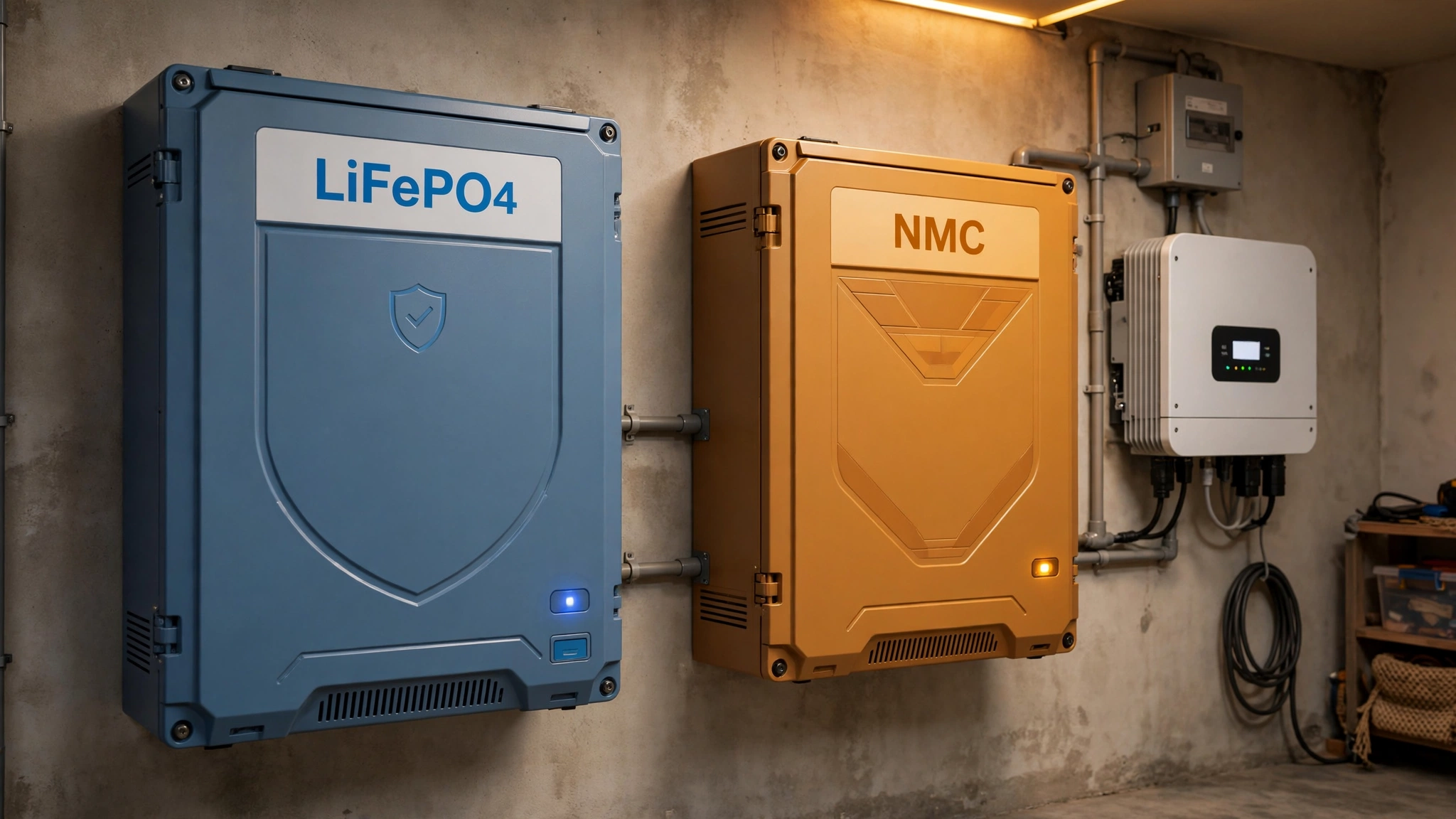
Here is the short answer, and the rest of this guide explains it in full: for home solar and load-shedding backup in Pakistan, LiFePO4 is the better choice for the vast majority of buyers. It lasts longer, handles heat better, is harder to set on fire, and — thanks to the falling prices of 2026 — usually costs less per usable kilowatt-hour. NMC still wins in two areas that mostly matter to electric vehicles, not rooftops: weight and compactness.
Quick Answer: LiFePO4 vs NMC at a Glance
| Feature | LiFePO4 (LFP) | NMC |
|---|---|---|
| Full name | Lithium iron phosphate | Nickel manganese cobalt |
| Nominal cell voltage | 3.2 V | ~3.6–3.7 V |
| Energy density | 140–180 Wh/kg (typical) | 200–280 Wh/kg (typical) |
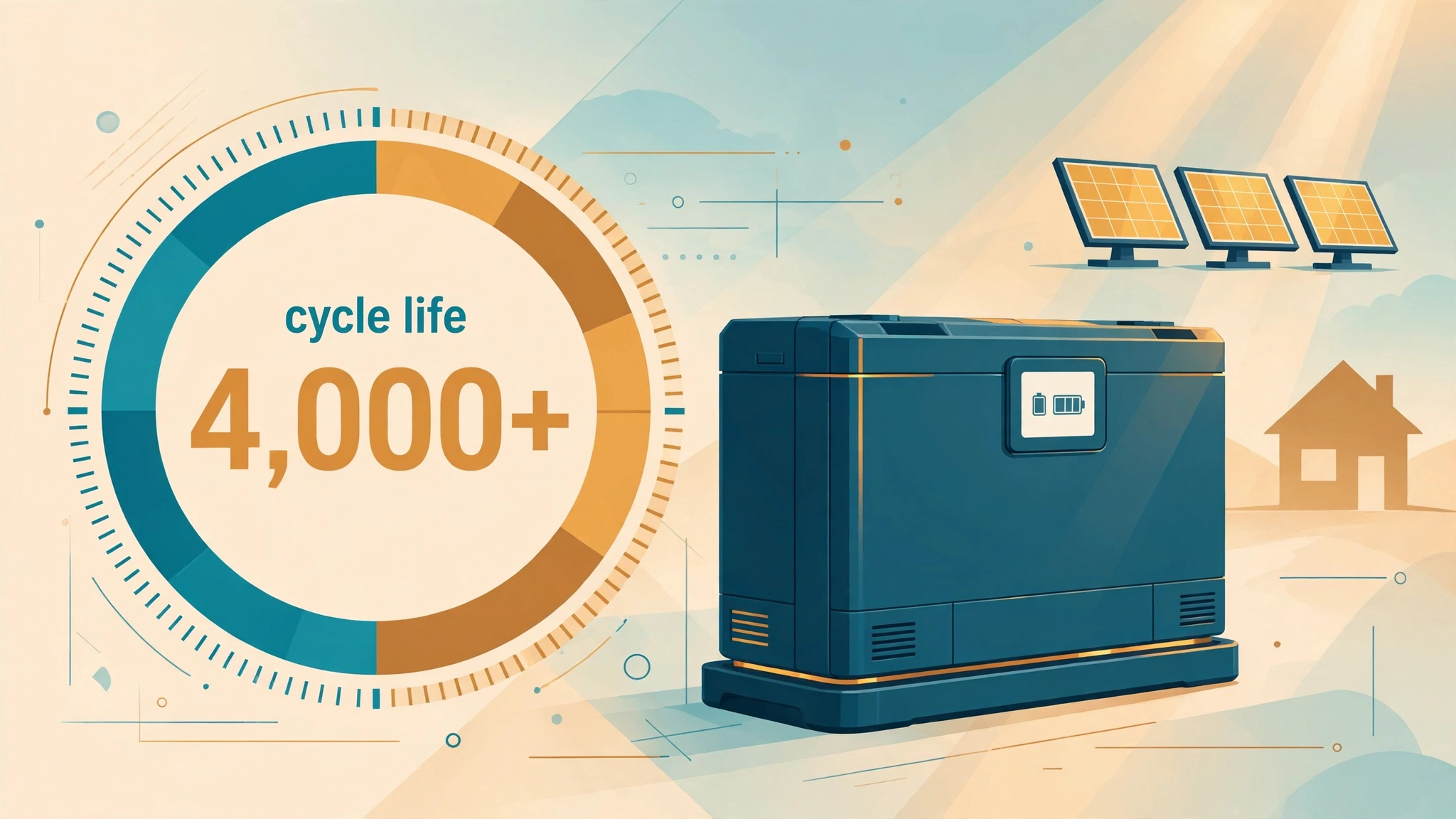
| Cycle life (at ~80% DoD) | 3,000–6,000+ cycles | 1,000–3,000 cycles |
| Thermal runaway threshold | ~270°C | ~210°C |
| Cobalt content | None | Yes (nickel + cobalt) |
| Typical retail availability in Pakistan | Widely available in many brands | Rare as standalone solar batteries |
| Rough 48V 100Ah price, Pakistan, as of Oct 2026 | PKR 215,000–545,000 (brand-dependent) | No standard retail market; expect similar or higher |
| Best for | Home solar, backup, off-grid | EVs, portable power, space-tight installs |
(Typical industry values compiled from manufacturer specification sheets and comparison guides; exact figures vary by brand and model.)
Table of Contents
- What LiFePO4 and NMC Actually Are
- Cycle Life: How Many Years Each Chemistry Lasts
- Safety and Thermal Runaway: The Chemistry Difference
- Heat Tolerance: What 40°C+ Pakistani Summers Do to Each
- Depth of Discharge and Usable Capacity
- Weight, Size and Energy Density
- Availability and Rough Prices in Pakistan (October 2026)
- Which Suits Home Solar + Load Shedding Backup?
- Which Suits Off-Grid Solar?
- Where NMC Still Makes Sense
- Our Recommendation for the Average Pakistani Solar Buyer
- Buying Checklist: How to Spot a Genuine LiFePO4 Battery
- FAQs
- Conclusion
- Sources & Further Reading
What LiFePO4 and NMC Actually Are
Both are members of the lithium-ion family. In a rechargeable cell, lithium ions shuttle back and forth between the anode (usually graphite) and the cathode while you charge and discharge. The chemistry name tells you what the cathode is made of — and that cathode material decides most of the battery’s personality.
LiFePO4 uses lithium iron phosphate for the cathode. Its atoms lock into a crystal pattern (called olivine) held together by very strong phosphorus–oxygen bonds. That rigid structure is the whole story behind LFP’s reputation: it resists breaking down under heat and abuse.
NMC uses a blend of nickel, manganese and cobalt oxides in a layered structure. The nickel pushes up the energy density — more electricity stored per kilogram — while manganese adds stability and cobalt improves how the cell performs at high charge rates. The trade-off is that the metal–oxygen bonds in that layered structure are weaker than LFP’s phosphate bonds, so the cathode starts to break down at a lower temperature.
If you want the basics of how these cells charge and discharge, our ultimate guide to how lithium batteries work walks through it step by step.
One practical detail worth knowing: because LFP cells sit at a lower nominal voltage (3.2 V per cell), a 48V-class LFP battery is usually built from 16 cells in series — giving 51.2 V nominal. That is why you see “51.2V 100Ah” printed on most solar LFP packs in the Pakistani market. NMC’s 3.6–3.7 V cells reach roughly the same pack voltage with fewer cells, but as we will see, that density advantage rarely matters on a rooftop.
Cycle Life: How Many Years Each Chemistry Lasts
Cycle life is the number of full charge–discharge cycles a battery delivers before its capacity drops to about 80% of the original. For a solar home that charges and discharges daily, cycle life is the single biggest driver of how many years you get for your money.
Published comparison guides and manufacturer datasheets typically place LiFePO4 at roughly 3,000–6,000 cycles (some premium packs advertise up to 8,000) at 80% depth of discharge, and NMC at roughly 1,000–3,000 cycles under similar conditions. Because the NMC cathode degrades faster with each deep cycle and with heat exposure, its calendar life tends to land at about 5–8 years of daily solar cycling, while a quality LFP pack can realistically deliver 8–15 years depending on temperature and how it is treated.
Translated into rupees, the difference compounds. A LiFePO4 battery bought today may survive until your inverter needs replacement; an NMC-based pack in the same duty could need replacing roughly twice in the same span. EcoFlow’s home-storage comparison makes the same point in plain terms: with frequent cycling, LFP usually delivers a lower cost per kilowatt-hour over 10–15 years, while NMC stays competitive mainly in standby roles where it is rarely cycled.
Two important qualifications:
- Cycle ratings assume controlled conditions — typically around 25°C and moderate charge/discharge rates (roughly 0.2–0.5 C). A Pakistani battery room hitting 45°C in July will not deliver the brochure number from either chemistry.
- Partial cycles add up proportionally. Discharging to 50% and recharging twice counts as roughly one full cycle. So a battery that only cycles deeply during load-shedding outages will outlast one hammered by daily solar self-consumption — a nuance worth remembering when you size your system. Our deep dive on what 3,000–6,000 battery cycles really mean explains how to turn the datasheet number into an honest years-of-service estimate.
Safety and Thermal Runaway: The Chemistry Difference
Thermal runaway is the failure mode that gives lithium batteries their reputation. It is a chain reaction: a cell overheats, the heat breaks down internal materials, which releases more heat — and, in some chemistries, oxygen — which feeds the reaction until the cell vents, smokes, or catches fire.
Here the chemistry gap is large and well-documented:
- LiFePO4 becomes unstable at roughly 270°C, and the strong P–O bonds in its cathode resist releasing oxygen even under overcharge, puncture, or crushing. Under extreme abuse it typically vents smoke rather than igniting.
- NMC can enter thermal runaway at roughly 210°C — and some analyses put the onset of cathode decomposition lower still, around 150–180°C for certain nickel-rich blends. When the layered oxide breaks down it releases free oxygen directly into the flammable electrolyte, which can make the fire self-sustaining.
To be clear, this does not mean NMC batteries are exploding in every home. A well-designed NMC pack with a proper battery management system (BMS) — cell-level monitoring, overcharge protection, temperature cutoffs — is safe in normal use; you already carry NMC cells in your laptop and probably your phone. But the margin of safety is wider with LiFePO4, and that margin matters most exactly where solar batteries live: inside or beside the family home, in hot garages, store rooms, and small battery closets, often running for a decade or more with minimal supervision.
That is also why the entire stationary-storage industry has moved in LFP’s direction. Even in electric vehicles — NMC’s stronghold — standard-range models from Tesla, BYD and Ford increasingly use LFP cells to cut cost while keeping adequate range, reserving NMC for long-range and performance variants. For a battery bolted to your house wall, safety margin is worth more than saving a few kilograms.
A quality BMS remains essential regardless of chemistry. It is the battery’s “brain”: watching voltage and temperature per cell, cutting off charging when full, and disconnecting loads when voltage drops too low. If you want to know what kills lithium packs early — the usual suspects are heat, chronic overcharge, deep discharge abuse and poor ventilation — see our guide on 9 mistakes that kill your lithium battery early.
Heat Tolerance: What 40°C+ Pakistani Summers Do to Each
This is where the Pakistani context flips an already-favorable comparison into a decisive one. In Lahore, Multan, Sukkur or Turbat, ambient temperatures routinely cross 45°C, and a closed garage or store room can run several degrees hotter than the shaded outdoor thermometer.
Heat accelerates chemical aging in every lithium cell, but the two chemistries do not suffer equally:
- LiFePO4 packs are typically rated for operation up to about 55–60°C, and their calendar aging accelerates more slowly in heat. Most Pakistani LFP packs carry an operating-temperature specification of roughly −10°C to +55°C.
- NMC’s comfortable operating window tops out lower (many guides cite roughly 10–45°C as the sweet spot), and high temperatures shorten its life noticeably faster than LFP’s.
Practical guidance follows from this. With either chemistry, do not mount the battery where afternoon sun hits the cabinet directly, keep some airflow around it, and if possible give the battery room light ventilation or even air-conditioning in the worst months. These steps are good practice for any lithium pack, but they are mandatory reading for NMC in a Pakistani summer. Our dedicated guide on lithium battery lifespan in hot climates goes deeper into placement, ventilation, and temperature derating for Pakistan’s heat.
Bottom line: in a country where “mild” summer days hit 40°C, choosing the chemistry with the wider heat margin is not a luxury — it is longevity insurance.
Depth of Discharge and Usable Capacity
Depth of discharge (DoD) answers a simple question: how much of the battery’s rated capacity can you actually use before recharging? This directly affects how big a battery you must buy.
- LiFePO4: most solar packs are rated for 80–90% DoD as standard operating practice, and the flat discharge curve means the voltage stays stable almost until the battery is empty. Many manufacturers rate their cycle-life numbers at 80% DoD, which tells you that deep regular use is the expected duty — not an abuse case.
- NMC: also discharges deeply in principle, but frequent deep discharges wear the layered cathode faster. Guides generally recommend more conservative everyday windows (roughly 20–80% state of charge for daily cycling) to protect lifespan — which means you must buy a bigger NMC pack to deliver the same usable daily energy.
Worked example: suppose your evening load-shedding backup needs 4 kWh of usable energy. A LiFePO4 system sized at 5 kWh nominal gives you that at 80% DoD comfortably. To deliver the same 4 kWh while staying inside a gentler 60% window for NMC longevity, you would need roughly a 6.7 kWh NMC pack — a bigger, heavier, and pricier box for the same job. That “buy bigger to be gentle” penalty quietly erodes NMC’s headline cost advantage wherever daily cycling is involved.
If your battery ever seems to die faster than its rating suggests, the cause is rarely chemistry alone — wiring losses, vampire loads and inverter standby draw are frequent culprits, as covered in our guide to why your lithium battery drains fast.
Weight, Size and Energy Density
Energy density is NMC’s genuine stronghold. At roughly 200–280 Wh/kg versus LiFePO4’s roughly 140–180 Wh/kg, an NMC pack of the same capacity weighs about 30–40% less and takes up noticeably less space.
For an electric car — where every extra kilogram cuts driving range and every litre of pack volume has to squeeze under the floor — that advantage is decisive. For a stationary box mounted on your garage wall, it is nearly irrelevant. Nobody’s rooftop cares whether the backup battery weighs 45 kg or 65 kg, and a wall-mount cabinet has room to spare in most Pakistani homes. A typical 48V/51.2V 100Ah LiFePO4 unit (about 5 kWh) weighs roughly 42–52 kg according to Pakistani retailer specification sheets — heavy enough to need a proper wall bracket, light enough for two people to lift.
The one situation where NMC’s compactness could matter for solar is a very space-constrained install — a tiny apartment balcony cabinet, say — and even there, the safety and longevity trade-offs make it a hard sell. Flat discharge curve, by contrast, is a quiet LFP advantage in daily use: your inverter sees a steady voltage from full to nearly empty, which simplifies battery management and keeps appliances running predictably.
Availability and Rough Prices in Pakistan (October 2026)
Here the comparison stops being theoretical, because NMC solar storage batteries have almost no retail presence in Pakistan. Walk into the solar markets of Lahore, Karachi or Gujranwala and every lithium pack on the shelf — Inverex, Knox, Apex, DJDC, Narada, Itel, Pylontech — is LiFePO4. NMC cells in Pakistan show up mainly in electric vehicles, laptops and portable power stations, not as 48V home-storage packs with inverter communication and local warranty. That alone should tell you which chemistry the local industry has standardized on.
For LiFePO4, 2026 retail prices for the common 48V/51.2V 100Ah class (about 5 kWh) look roughly like this, based on Pakistani solar retailers’ published rates. Treat all of these as rough ranges as of October 2026 — street prices move with the dollar, the season and the dealer:
| Brand / Model | Chemistry | Capacity | Rough Price (PKR) |
|---|---|---|---|
| Budget brands (Knox, Dyness, DJDC 5 kWh) | LiFePO4 | ~5 kWh (100 Ah) | 215,000–275,000 |
| Mid-range (Apex 5.12 kWh, Narada NESR) | LiFePO4 | ~5 kWh (100 Ah) | 270,000–295,000 |
| Premium (Pylontech UP5000) | LiFePO4 | ~5 kWh (100 Ah) | 350,000–430,000 |
| Premium local (Inverex Powerwall series) | LiFePO4 | ~5 kWh (100 Ah) | 450,000–545,000 |
| Budget 10 kWh wall-mount (Knox, DJDC) | LiFePO4 | ~10 kWh (200 Ah) | 445,000–525,000 |
That works out to roughly PKR 28,000 to 55,000 per kWh, with the cheapest PKR/kWh coming from high-volume budget brands and the dearest from premium local-ecosystem models with long warranties and country-wide service networks.
For NMC, there is no standard retail price series to quote — that is itself the point. Imported or EV-grade NMC packs typically cost similar or more per kWh than budget LFP while offering no local warranty or inverter-BMS integration support in Pakistan. When a product has no price list, no local warranty network and no installer who knows how to service it, the comparison is effectively over.
Two cost notes worth keeping in mind:
- Prices have been falling. Pakistani solar retailers report lithium prices dropped roughly a third over the eighteen months before mid-2026. Buying today is meaningfully cheaper than buying in 2024 — another reason to size the system you actually need rather than under-buying to “save” money now and replacing lead-acid batteries every two years.
- Budget for the bits around the battery. DC protection between the battery and the inverter — isolator, breaker, fuse and surge protection — typically adds roughly PKR 14,000–18,000 to a residential install. It is required by code and by most battery warranties, so do not skip it.
For more on where these prices sit in the broader market, our articles on the best lithium battery for solar systems and lithium battery vs lead-acid battery put the value calculation in context.
Which Suits Home Solar + Load Shedding Backup?
Load-shedding backup is the dominant Pakistani use case: grid power disappears, the battery carries the essential loads (fans, lights, fridge, TV, Wi-Fi) until the grid — or the morning sun — returns. This profile is nearly tailor-made for LiFePO4:
- Daily partial-to-full cycling. Backup duty during Pakistan’s outage-heavy months means the battery cycles hard, often daily. LFP’s 2–3× cycle-life advantage is where it earns its price.
- Unattended operation. The battery sits in the house for years. LFP’s higher thermal-stability threshold and slower failure propagation are exactly what you want from a device the family sleeps next to.
- Heat. Backup cabinets are rarely air-conditioned. LFP’s wider heat margin keeps calendar aging manageable in a 45°C July.
- Predictable voltage. The flat discharge curve keeps fans and electronics running evenly through an outage instead of sagging as the battery empties.
NMC could theoretically serve here, but you would be buying a battery that is harder to source, shorter-lived under the same duty, fussier about heat, and unsupported by local warranty networks. There is no Pakistani load-shedding scenario where that trade makes sense.
Which Suits Off-Grid Solar?
Off-grid systems in Pakistan — farmhouses, tube-well setups, remote homes in Balochistan or northern areas — run a similar daily-cycling profile but with higher stakes: the battery is the grid. If it fails, there is no WAPDA to fall back on.
That makes longevity and serviceability the deciding factors again, and again they point to LiFePO4:
- Longer service intervals mean fewer replacement trips to remote sites — a real cost when the site is hours from the nearest city.
- Local availability of spares and know-how. Off-grid installers across Pakistan work with LFP packs daily; finding someone who can diagnose an imported NMC pack in a remote area is a gamble.
- Cold-climate nuance: one honest counterpoint — NMC performs somewhat better in freezing cold. In the high northern areas where winter nights drop well below zero, LFP charging must be limited or the pack kept above freezing (most LFP BMS units simply refuse to charge below 0°C to prevent lithium plating). If your off-grid site is in a genuinely cold zone, plan the battery room with insulation or a small heater rather than switching chemistry: the rest of LFP’s advantages still hold.
Where NMC Still Makes Sense
Fairness requires saying where NMC wins, because “worse for solar” does not mean “worse battery”:
- Electric vehicles — the original NMC stronghold, where weight and range dominate every other consideration.
- Portable power — laptops, phones, power tools, drones: anything where grams matter more than decades.
- Space-constrained installs — if your only possible battery location genuinely cannot fit an LFP cabinet, NMC’s compactness is a real advantage (though we would still recommend checking LFP options first).
- Cold environments — NMC discharges better below freezing, relevant for high-altitude or export markets rather than most of Pakistan.
And one important caveat: NMC technology is not standing still. Nickel-rich blends, silicon anodes and improved electrolytes keep narrowing the gap. But as of October 2026, for stationary solar storage, the gap remains wide enough that no Pakistani home buyer should hold their breath for it.
Our Recommendation for the Average Pakistani Solar Buyer
Buy LiFePO4. That is the whole recommendation, and it is not close for the average Pakistani solar buyer:
- Safety: the chemistry’s thermal stability (~270°C threshold, no oxygen release) gives a wider margin in hot homes.
- Lifespan: roughly 2–3× the cycle life of NMC under daily solar cycling — which usually translates into a lower cost per delivered kWh over 10–15 years.
- Heat tolerance: built for Pakistan’s 40°C+ summers in a way NMC simply is not.
- Availability and support: every major brand sold in Pakistan is LFP; local warranties, installers and spare parts all assume LFP.
- Price: budget LFP at roughly PKR 215,000–275,000 for a 5 kWh unit is the cheapest long-lived storage you can buy in Pakistan as of October 2026.
Choose a reputable brand with a real local warranty (5 years is the current standard among serious brands), confirm the pack communicates with your inverter (CAN/RS485), size for 80% depth of discharge, and keep it ventilated and out of direct sun. Then check on its health once or twice a year — our guide to checking your lithium battery’s health at home shows you how with a multimeter and your inverter’s app.
The one exception: if you are buying NMC anyway for a non-solar reason (an EV conversion, a portable rig), the rules change — but for a battery that lives in your home and gets cycled by your solar panels, LiFePO4 is the right answer.
Buying Checklist: How to Spot a Genuine LiFePO4 Battery
Use this quick checklist before you hand over money:
- [ ] Chemistry printed on the label: look for “LiFePO4” or “LFP”. If the datasheet only says “lithium-ion” without naming the cathode chemistry, ask — and get the answer in writing.
- [ ] Cycle-life rating stated: a genuine LFP solar pack should advertise at least 3,000 cycles at 80% DoD; reputable ones claim 6,000+. Vague or missing cycle ratings are a red flag.
- [ ] Built-in BMS with inverter communication: CAN or RS485 ports so the battery talks to your hybrid inverter. This is what protects the pack from overcharge and deep discharge.
- [ ] Real warranty, real company: 3–5 years from a brand with a Pakistani service presence. A “5-year warranty” from a shop that cannot name its importer is worth little.
- [ ] Voltage matches your inverter: 51.2V (16-cell LFP) pairs with standard 48V hybrid inverters; confirm before buying.
- [ ] Operating temperature range printed: look for up to +55°C or higher on the datasheet.
- [ ] DoD and efficiency figures: expect ≥80% DoD and ≥95% round-trip efficiency on a quality pack.
FAQs
Is LiFePO4 really safer than NMC for home use?
Yes — the safety gap is one of the clearest differences between the two. LiFePO4’s cathode structure stays stable up to roughly 270°C and resists releasing oxygen under abuse, while NMC can enter thermal runaway around 210°C and releases oxygen that feeds the reaction. Both are safe in normal use with a good BMS, but LFP’s margin of safety is wider in exactly the conditions a home battery faces: heat, long unattended operation and eventual aging.
How long does a LiFePO4 battery last compared to NMC in daily solar use?
Under daily solar cycling at roughly 80% depth of discharge, LiFePO4 typically delivers 3,000–6,000+ cycles (roughly 8–15 years in real Pakistani conditions, less if the battery room runs very hot). NMC under the same duty typically delivers 1,000–3,000 cycles (roughly 5–8 years). Heat and aggressive deep cycling shorten both, but NMC more so. See our lifespan guide for the full picture.
Why are almost all solar batteries sold in Pakistan LiFePO4?
Because the local industry converged on the chemistry that suits the market: safer in 45°C heat, longer-lived under daily cycling, cheaper per usable kWh, and backed by local warranties and installer know-how. Every major brand sold here — Inverex, Knox, Apex, Narada, DJDC, Itel, Pylontech — sells LiFePO4 storage packs. NMC’s advantages (light weight, compactness) matter to EVs, not to a battery bolted to a garage wall.
Can I use an NMC battery (for example, from an EV) for home solar?
Technically possible, but not advisable as a DIY project. EV NMC packs need compatible voltage ranges, a BMS your inverter can talk to, proper thermal management and correct fusing — and you get none of the local warranty or installer support that comes with purpose-built LFP solar packs. For almost everyone, a purpose-built LiFePO4 pack is cheaper, safer and simpler.
Does LiFePO4 work in very cold areas of northern Pakistan?
LFP discharges acceptably in the cold, but charging below roughly 0°C can permanently damage the cells — most LFP BMS units block charging in freezing conditions to prevent this. In genuinely cold zones (high northern valleys in winter), insulate the battery room or keep it slightly heated. NMC handles cold charging somewhat better, but switching chemistry for this one factor is rarely worth the other trade-offs.
What size LiFePO4 battery do I need for load-shedding backup?
Size for your essential loads at 80% depth of discharge, then add headroom. A common Pakistani benchmark: a 5 kWh (51.2V 100Ah) pack covers 4–6 hours of evening essentials (fans, lights, fridge, TV, Wi-Fi) for an average home. Article 11 in this series covers full battery sizing with worked load calculations.
Is LiFePO4 more expensive than NMC?
In Pakistan’s solar market, the question barely arises because NMC storage packs have almost no retail presence. Against the alternatives you can actually buy, budget LiFePO4 starts around PKR 215,000–275,000 for a 5 kWh unit as of October 2026 — and its 2–3× longer cycle life usually makes it the cheapest option per delivered kWh over the battery’s lifetime.
Do LiFePO4 batteries need maintenance?
Essentially none — no water topping, no equalization charges, no acid fumes. The practical maintenance is environmental: keep the battery ventilated, out of direct sun, within its temperature range, and check its reported health occasionally via the inverter app or BMS. Calendar aging still happens even in storage, so do not buy a pack to sit unused for years; read our guide on whether lithium batteries degrade when not in use if you are stockpiling.
Conclusion
LiFePO4 and NMC are both excellent lithium chemistries — they were simply optimized for different jobs. NMC was built to squeeze maximum energy into minimum weight for cars and gadgets; LiFePO4 was built to cycle safely for decades in stationary service. A Pakistani home solar battery needs the second job description: daily cycling, 45°C summers, a decade-plus of unattended operation inside the family home, and a price per usable kWh that pays for itself.
On every one of those axes — cycle life, safety margin, heat tolerance, usable depth of discharge, local availability and long-term cost — LiFePO4 wins for home solar. NMC keeps its crown where weight and compactness decide the purchase: electric vehicles and portable power. For the average Pakistani solar buyer choosing a battery in October 2026, the decision is straightforward: buy a quality LiFePO4 pack from a brand with a real local warranty, size it for 80% depth of discharge, keep it cool and ventilated — and let the sun do the rest.
Sources & Further Reading
- CoreTech Battery — LiFePO4 vs NMC Battery: Which is Better for Energy Storage in 2026? (comparison data: voltage, energy density, cycle life, thermal thresholds, cost per kWh): https://www.coretechbattery.com/products/news-lifepo4-vs-nmc.html
- Anern Solar — LiFePO4 vs. NMC: Battery Safety & Chemistry Comparison (olivine vs layered-oxide stability, 270°C vs ~210°C thresholds, cycle-life ranges): https://www.anernstore.com/blogs/diy-solar-guides/lifepo4-vs-nmc-battery-safety
- EcoFlow — LFP vs NMC Battery for Home Storage: Safety and Lifespan (daily-cycling lifespan, life-cycle cost per delivered kWh, SOC and C-rate practice): http://energy.ecoflow.com/us/blog/lfp-vs-nmc-home-storage-safety-lifespan
- CNC Electric Pakistan — Lithium Battery Price in Pakistan 2026 — LiFePO4 48V Buyer Guide (Pakistani retail price table, PKR/kWh ranges, 51.2V voltage notes, brand comparison): https://www.cncelectric.pk/blogs/guides/lithium-battery-price-in-pakistan-2026-lifepo4-48v-buyer-guide-with-dc-protection
- Solar Hub Official — Lithium Battery Price in Pakistan: Best 2026 Rates & Top Brands (Narada, Pylontech, Inverex, Knox/Dyness estimated rates and warranties): https://solarhubofficial.com/lithium-battery-price-in-pakistan/